
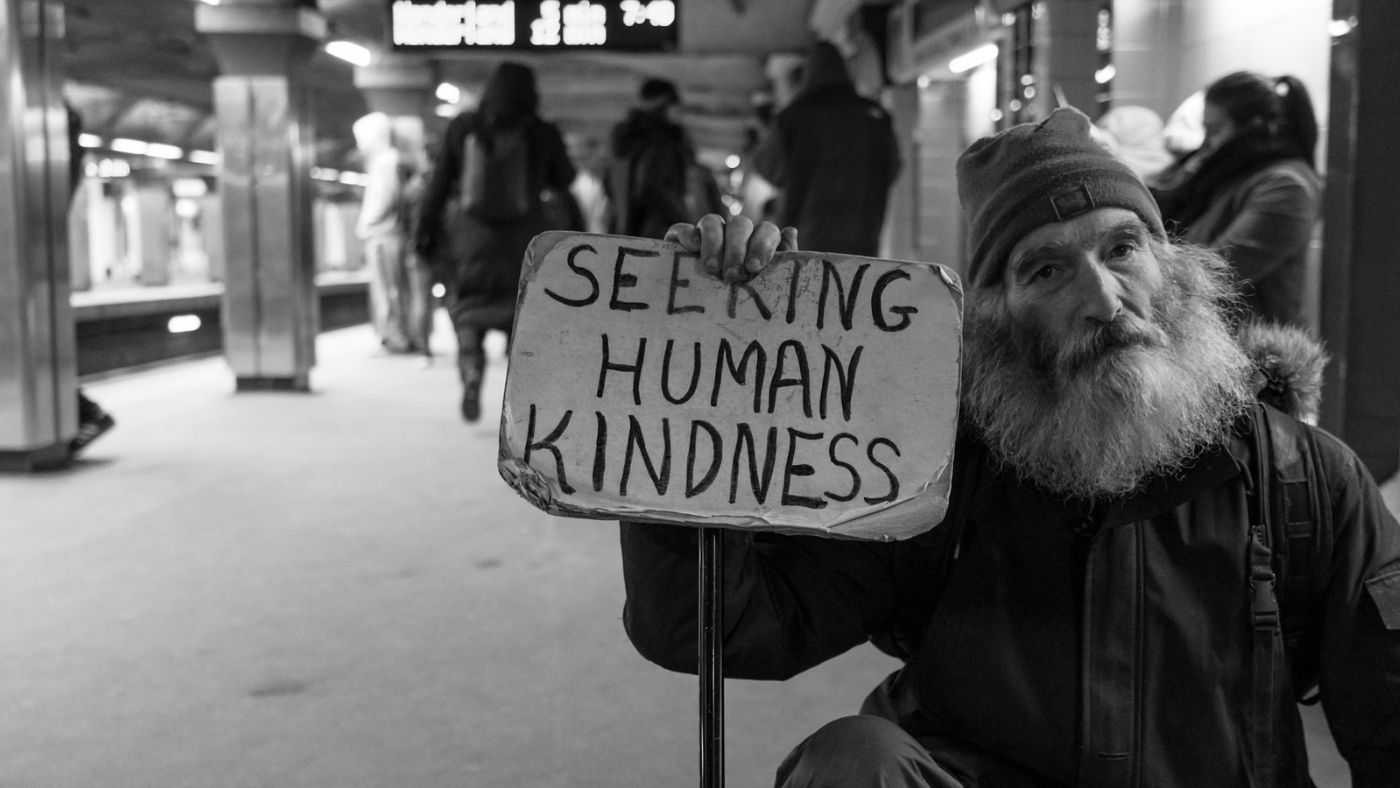
Imagine that you’re late for a meeting, rushing across campus, and you see someone slumped on the sidewalk looking like they need help.
Do you stop? Or do you think, “Sorry, buddy, I’ve got places to be”?
That’s the exact dilemma psychologists John Darley and Daniel Batson set up in 1973.
Inspired by the biblical parable of the Good Samaritan, they wanted to know: what makes people stop to help strangers? Is it about personality, religious values, or just whether you’ve got five minutes to spare?
The results were both humbling and admittedly a bit hilarious. Even seminary students on their way to give a talk about (…wait for it…) the Good Samaritan often walked right past someone in need if they thought they were running late.
Turns out, our sense of morality may be less about who we are and more about whether we’ve got time to spare.
Background and Context
The 1970s were a kind of golden era for quirky social psychology experiments.
Researchers were obsessed with testing how context and situation shape behavior. Stanley Milgram had just shown that ordinary people could shock strangers into oblivion if told to by an authority figure. Similarly, Philip Zimbardo had locked students in a basement and watched them turn into tyrants.
Darley and Batson, both psychologists at Princeton, were interested in “helping behavior”. Why do some people stop to help while others keep walking?
They decided to test this question on seminary students: people training for the ministry, who you’d think might be extra motivated to help others.
The biblical parable of the Good Samaritan provided the perfect backdrop: a story about a traveler who stops to help a stranger when others pass by. Would modern-day theology students live up to the example?
The Experiment Itself
Darley and Batson recruited seminary students at Princeton Theological Seminary. Each student was told they needed to walk to another building to give a short talk.
The twist:
- Half were told their talk topic was the Good Samaritan parable.
- The other half were told to speak on jobs that seminary students might pursue.
Then came the real manipulation: time pressure.
- Some students were told they were late and needed to hurry.
- Some were told they were right on time.
- Others were told they had a few minutes to spare.
On the way to the talk, each student encountered a man (an actor planted by the researchers) slumped in a doorway, coughing and groaning. The question was simple: would the students stop to help him?
The results were both fascinating and a maybe little depressing:
- In the low-hurry group, about 63% stopped to help.
- In the medium-hurry group, only 45% stopped.
- In the high-hurry group, a measly 10% stopped.
And here’s the kicker: whether the student was about to lecture on the Good Samaritan or on job opportunities made no difference. Even students about to preach compassion sometimes stepped over the guy on their way to class.
Impact on Psychology
The Good Samaritan experiment was a landmark in showing just how much situational factors can override personal values.
Before this, many psychologists (and I think it’s safe to say most ordinary people) assumed that helping behavior was mainly about who you are. A compassionate person helps; a selfish person doesn’t.
Simple, right?
Well, Darley and Batson’s findings complicated that story. Here were seminary students, people who had chosen a career in ministry, some literally about to give a talk on compassion. If anyone should have stopped to help, it was them.
Yet the biggest predictor wasn’t their personality, their religious training, or even the content of their sermon. It was whether they thought they were late.
That discovery was humbling, and it fit perfectly into the broader movement of social psychology in the 1970s, which was busy dismantling the idea that behavior is mainly driven by stable traits.
Milgram had shown that ordinary people could become torturers under authority pressure. Zimbardo had shown that college kids could turn into sadistic prison guards with too much power. And now Darley and Batson showed that even future ministers could step over a suffering stranger if the clock was ticking.
The experiment also helped solidify the concept of the “fundamental attribution error,” which is our quirky little tendency to overestimate the role of personal character and underestimate the role of situation when explaining behavior.
So, for example, we might assume someone didn’t help because they’re selfish, when in fact they might have been late, distracted, or just plain overwhelmed.
Curiously enough, the Good Samaritan study didn’t just tell us something about helping. Instead, it told us something bigger: that our moral behavior is far more fragile and context-dependent than we’d, frankly, like to admit.
Connections to Broader Theories
The study connects to several key themes in psychology:
- Situational vs. dispositional factors: Do people behave based on who they are (disposition) or where they are (situation)? Darley and Batson showed that situation often wins.
- Bystander effect: Other research in the 1960s and 70s (like the studies inspired by Kitty Genovese’s murder) showed that people are less likely to help when others are around. The Good Samaritan study added another twist: people are also less likely to help when they’re in a rush.
- Cognitive load: Being in a hurry occupies mental bandwidth, leaving less room for noticing or acting on moral impulses.
Together, these findings underscored a central theme of social psychology: we’re not as consistent or principled as we like to think.
Ethical Considerations
Compared to the likes of experiments like the 1939 Monster Study or the classic case of poor Little Albert, the Good Samaritan experiment looks remarkably tame. After all, the “victim” was just an actor coughing in a doorway, and the participants were adults, not vulnerable children.
Still, there are some ethical questions.
The students weren’t told they’d be tested on their compassion, so there was an element of deception. Some may have felt guilty afterward when they learned they’d walked past someone in need.
But overall, the distress was mild, and the study is generally considered ethically acceptable.
Replication and Critiques
The Good Samaritan experiment may have been small since it was just a group of Princeton seminary students hustling across campus, but its findings have echoed through decades of fascinating research on helping behavior.
Replications and Extensions
Other studies have confirmed the central idea: time pressure reduces helping.
For example, research in urban settings has shown that people in crowded, fast-paced environments are less likely to stop for strangers than those in slower, smaller communities. It’s not necessarily that city dwellers are colder; it’s that they’re often busier, more distracted, and more overloaded.
The study also dovetails with the famous bystander effect, first demonstrated by John Darley (yes, the same Darley) and Bibb Latané in 1968. They found that people are less likely to help when others are around, because everyone assumes someone else will step in.
Combine that with time pressure, and you get a cocktail of excuses for inaction: “I’m late, and surely someone else will handle it.”
Later research has also explored factors like mood (people in a good mood are more likely to help), empathy (feeling someone else’s distress increases helping), and similarity (we’re more likely to help people who seem like us).
The Good Samaritan experiment helped kick-start this whole branch of prosocial behavior research!
Critiques of the Original Study
Of course, the Good Samaritan experiment wasn’t perfect. Critics have pointed out a few limitations:
- Small, homogenous sample: The participants were all male seminary students at Princeton. That’s not exactly a representative slice of humanity. Would the results hold with women? With non-religious participants? With people from different cultures? Later studies suggest yes, but the original sample was still narrow.
- Artificial setup: The “victim” was just an actor slumped in a doorway. Some students may have genuinely thought the situation wasn’t serious, or that the man didn’t want help. Real-life emergencies are often way more ambiguous, and people weigh risks differently.
- Overemphasis on situation: While the study highlighted the power of time pressure, it may have underplayed the role of personality and values. Some participants did help, even when rushed, suggesting that disposition still matters, though perhaps not quite as much as we like to think.
- Ethical concerns: The deception was mild compared to other 1970s experiments, but some students may have felt guilty afterward when they learned they’d ignored someone in need. Today, researchers would be expected to debrief participants carefully to minimize distress.
Cultural Considerations
One fascinating critique that’s particularly worth reflecting on is the cultural element at play here. After all, helping behavior can vary across societies, depending on norms around community, individualism, and responsibility.
For example, studies have shown that people in collectivist cultures (think Japan, Thailand, or Ghana) may be more likely to help strangers, while those in highly individualistic cultures (think the US, the UK, or Germany) may focus more on personal schedules.
The Good Samaritan experiment, being rooted in an American Ivy League setting, reflects only one cultural snapshot rather than a universal truth.
Modern Relevance
Fast-forward to today, and the Good Samaritan experiment feels almost uncomfortably familiar, doesn’t it?
We live in a world of constant rushing, where it’s like we’re constantly late for work, late for class, late for picking up the kids… Add in smartphones, earbuds, and a waterfall of endless notifications, and it’s easier than ever to miss (or totally ignore) someone in need.
Think about it: how many times have you walked past someone asking for help on the street, telling yourself you were “too busy” or “in a rush”? That’s the Good Samaritan effect in real life. The study reminds us that compassion isn’t just about having good values, but also about having the mental space and time to notice and act.
The findings from the experiment also resonate in professional settings.
Doctors, nurses, and first responders often face time pressure, and research shows that burnout and overload can greatly reduce their ability to provide compassionate care.
Even in workplaces like an office setting, people under deadline stress are less likely to help colleagues. It’s not because they don’t care, but because they literally feel they can’t spare the time!
On a broader scale, the study challenges how we think about morality in society. We often praise or blame individuals for their actions, but the Good Samaritan experiment suggests we should also look at the systems and situations that shape behavior.
If we want more kindness in the world, maybe it’s not just about telling people to be better. Maybe it’s more about creating environments where people have the time and freedom to act on their values.
And yes, the somewhat humorous irony still stings: if even theology students can walk past a suffering stranger on their way to preach about compassion, then none of us should be too quick to assume we’d always stop.
The real lesson? Don’t just trust your values; check your calendar.
Tomato Takeaway
The Good Samaritan experiment showed that being a good person isn’t just about what you believe or preach. It’s about whether you have the time to act on it. When we’re rushed, our better angels often get left in the dust.
But as we wrap up this look at the Good Samaritan Experiment, now it’s your turn to join the conversation with today’s Tomato Takeaway:
Do you think you’d stop to help if you were late, or would the clock win out?
Share your thoughts in the comments. If you’re not in too much of a rush, that is… 😉

Fueled by coffee and curiosity, Jeffrey is a veteran blogger with an MBA and a lifelong passion for psychology. Currently finishing an MS in Industrial-Organizational Psychology (and eyeing that PhD), he’s on a mission to make science-backed psychology fun, clear, and accessible for everyone. When he’s not busting myths or brewing up new articles, you’ll probably find him at the D&D table or hunting for his next great cup of coffee.