
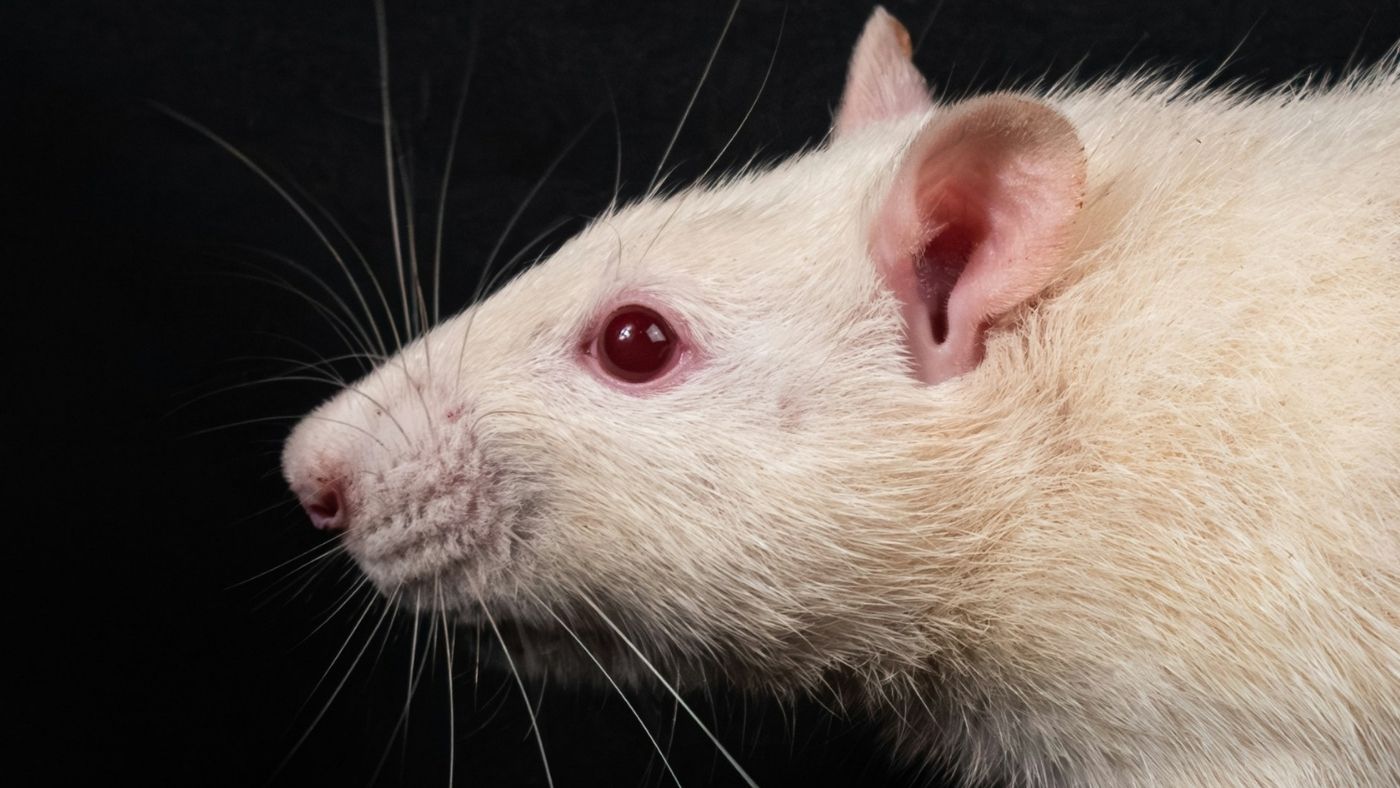
Picture this: you’re a baby in 1920, living your best baby life.
You’ve got toys, you’ve got snacks, you’ve got a fluffy white rat to play with. Life is good!
Then, out of nowhere, someone slams a steel bar behind your head every time you reach for the rat. Suddenly, that adorable ball of fluff is the scariest thing you’ve ever seen.
Congratulations! You’ve just been conditioned, and psychology has made you cry.
The Little Albert experiment is one of the most (in)famous studies in psychology, not because it was kind to its subject (spoiler: it wasn’t), but because it demonstrated something groundbreaking: it showed that fear, one of our most powerful emotions, can actually be learned.
Yet at the same time, it stands as a cautionary tale about how far psychology has come in terms of research ethics.
Background and Context
The Little Albert experiment was carried out in 1920 by John B. Watson, who is often called the “father of behaviorism,” and his graduate student (and later partner) Rosalie Rayner at Johns Hopkins University.
At that time, psychology was trying to prove itself as a “real science.” Earlier approaches, like Structuralist introspection, had relied on people sitting in chairs and describing their feelings, which was about as scientific as asking someone to rate their vibes on a scale of one to ten. Watson wanted something more objective, something you could observe and measure.
Behaviorism was his answer.
The central idea was simple: human behavior isn’t mysterious, it’s shaped by the environment.
If Pavlov could make dogs drool at the sound of a bell, Watson believed he could make humans feel fear at the sight of a harmless object. The Little Albert experiment was his attempt to prove this point.
The Experiment Itself
The subject of the experiment was a baby known to history only as “Little Albert.” He was about nine months old when the study began.
At first, Watson and Rayner introduced Albert to a variety of objects: a white rat, a rabbit, a monkey, a dog, masks, and even burning newspapers. Albert showed no fear. In fact, he seemed perfectly content to reach for the animals and play with them.
Then came the twist. Every time Albert reached for the white rat, Watson and Rayner created a loud, startling noise by striking a steel bar with a hammer right behind him. Naturally, Albert cried and showed distress at the sound.
After several pairings of the rat and the noise, something remarkable happened: Albert began to cry at the sight of the rat alone, even when no noise was made.
This was classical conditioning in action. Just as Pavlov’s dogs learned to associate a bell with food, Albert learned to associate the rat with fear.
What made the experiment even more striking was that Albert’s fear generalized. He didn’t just cry at the rat; he also reacted with fear to a rabbit, a fur coat, and even a Santa Claus mask with a fluffy white beard.
In other words, once fear was conditioned, it spread.
Impact on Psychology
The Little Albert experiment became one of the most cited demonstrations of classical conditioning in humans. It showed that emotional responses, like fear, could be learned rather than being entirely hardwired.
This was a bold claim at the time, and it gave enormous momentum to the behaviorist movement, which dominated psychology for much of the 20th century.
But even going beyond theory, the experiment had practical implications. It laid the groundwork for treatments that are still used today, such as systematic desensitization and exposure therapy. These are techniques where people gradually face the things they fear in safe, controlled settings until the fear response weakens.
In other words, Watson and Rayner may have created fear in Albert, but the principles they demonstrated helped later psychologists learn how to undo fear in countless others.
Connections to Broader Theories
The Little Albert experiment wasn’t just a quirky one-off study; it was part of a bigger story in psychology.
Watson and Rayner were building on the work of Ivan Pavlov, the Russian physiologist who had shown that dogs could learn to salivate at the sound of a bell if it was repeatedly paired with food. Pavlov called this process classical conditioning, and Watson wanted to prove it applied to humans too.
By showing that a baby could be conditioned to fear a rat, Watson provided dramatic evidence that emotions could be shaped by experience and environment rather than being entirely innate.
This idea stood in sharp contrast to psychoanalysis, which dominated psychology at the time and focused on unconscious drives and inner conflicts. Behaviorism, with its emphasis on observable actions and measurable results, offered a much more “scientific” alternative.
The ripple effects of this experiment can also be seen in the work of B. F. Skinner, who took behaviorism further with operant conditioning, the idea that behaviors are shaped by rewards and punishments. Together, Pavlov, Watson, and Skinner created the foundation for much of modern learning theory.
And in clinical psychology, the principles demonstrated by Little Albert continue to inform treatments for phobias and anxiety disorders, especially exposure therapy, where patients gradually confront what they fear in a safe and controlled way until the fear response weakens.
Ethical Considerations
Now, let’s talk about the part of the story that makes modern psychologists wince. By today’s standards, the Little Albert experiment is a giant red flag of ethical violations.
First, there was no informed consent. Albert’s mother was reportedly a nurse at the hospital where the experiment took place, and it is unlikely she was fully informed of what was happening.
Second, there was no attempt to decondition Albert’s fear. They essentially created a phobia in a child and then just… walked away…
Third, the potential for long-term harm was very real. Imagine growing up with an unexplained fear of anything furry!
Modern psychology has strict ethical guidelines for a reason. Studies like this one, along with others such as the Milgram Obedience Experiment and the Stanford Prison Experiment, helped push the field to create safeguards like institutional review boards (IRBs), informed consent protocols, and requirements for debriefing.
In a sense, Little Albert’s distress contributed to the ethical standards that protect participants today.
Replication and Critiques
One of the striking things about the Little Albert experiment is that it has never been ethically replicated. Modern researchers can’t just terrify babies for science (thankfully).
That means the study has limitations: it was conducted with a single subject, had no control group, and lacked the kind of rigor we expect in experiments today. In fact, some scholars have argued that Albert’s responses weren’t as clear-cut as Watson and Rayner claimed, and that the study may have overstated its results.
Instead of repeating the experiment, psychologists have studied conditioned fear using more ethical methods.
For example, researchers often use mild electric shocks or loud noises paired with neutral stimuli in adult participants, who give informed consent and can withdraw at any time. These studies have confirmed that humans can indeed learn fear responses through conditioning, but they’ve also revealed complexities like the role of genetics, individual differences, and cognitive processes that Watson and Rayner didn’t account for.
Critics also point out that the Little Albert experiment reflects the limitations of early behaviorism. By focusing only on observable behavior, Watson ignored the inner experiences and biological factors that also shape fear and emotion.
Today, psychology has moved toward more integrative models that combine behavioral, cognitive, and biological perspectives.
Modern Relevance
A century later, the Little Albert experiment is still taught in virtually every introductory psychology class.
It continues to spark debates about the balance between scientific discovery and ethical responsibility. Though it also raises interesting questions about the nature of emotions: if fear can be learned, what else about our emotional lives is shaped more by experience than biology?
There has also been ongoing intrigue about Albert’s true identity.
For decades, no one knew who he really was. In 2009, researchers suggested that he was a boy named Douglas Merritte, who died at the age of six from hydrocephalus, a condition that may have already affected his development. Later evidence, however, challenged that conclusion, and some scholars now believe Albert may have been another child, William Barger, who lived into adulthood.
The mystery only adds to the legend of the experiment.
Tomato Takeaway
The Little Albert experiment teaches us three big lessons.
First, fear can be learned. That’s both fascinating and a little unsettling, because it means that some of the things we dread might not be innate but conditioned by our experiences.
Second, just because you can do an experiment doesn’t mean you should. Ethics matter, and the history of psychology is full of cautionary tales about what happens when researchers forget that very important fact.
And third, science has a sense of humor, even if it’s sometimes unintentional. The fact that a baby was conditioned to fear Santa Claus is both tragic and absurd, as well as a reminder that psychology has come a very long way since 1920.
So the next time you find yourself flinching at a spider, jumping at thunder, or dreading the words “we need to talk,” remember Little Albert. Fear isn’t always natural; sometimes it’s just learned. And if it’s learned, that means it can be unlearned too.
But wrapping up with today’s Tomato Takeaway, now it’s your turn to join the conversation!
What’s a fear you think you might have learned rather than been born with?
Share your thoughts in the comments below. Let’s see how many of our fears are really just our own “Little Albert” moments!

Fueled by coffee and curiosity, Jeffrey is a veteran blogger with an MBA and a lifelong passion for psychology. Currently finishing an MS in Industrial-Organizational Psychology (and eyeing that PhD), he’s on a mission to make science-backed psychology fun, clear, and accessible for everyone. When he’s not busting myths or brewing up new articles, you’ll probably find him at the D&D table or hunting for his next great cup of coffee.