
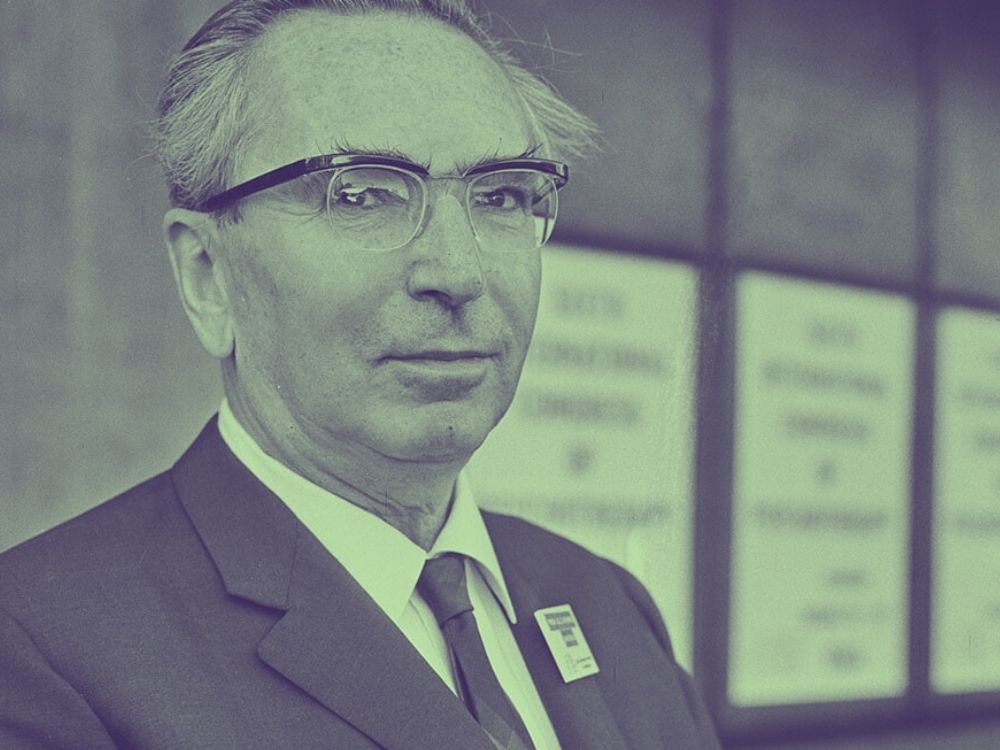
Ever wondered how people can hold onto hope in the absolute worst situations? Meet Viktor Frankl: Austrian neurologist, psychiatrist, Holocaust survivor, and all-around master of finding purpose when life looks hopeless.
Frankl didn’t just survive the concentration camps. Instead, he transformed his suffering into a philosophy that has inspired millions around the world.
His big idea? Even when you can’t control your circumstances, you can still control your attitude.
Basically: life may hand you a dumpster fire, but you still get to decide whether you roast marshmallows or just choke on the smoke.
Why Is Viktor Frankl Famous?
Frankl is best known as the founder of logotherapy, a form of existential psychotherapy that says our deepest drive isn’t pleasure (Freud’s jam) or power (Adler’s favorite). Instead, he said that it’s meaning we seek.
His book Man’s Search for Meaning is part memoir, part psychological guide, and all goosebumps. Written in just nine days after his liberation, it tells the story of his time in Nazi camps and the lessons he drew about resilience, hope, and the human spirit.
Frankl’s message: We can’t always change our situation, but we can choose our response.
Logotherapy = Psychology Meets Purpose
Let’s break it down, tomato-style:
The Will to Meaning
Forget chasing pleasure or power. Frankl argued that what we really crave is purpose. Without it, we feel empty, restless, or lost.
Think of it like running an app on your phone with bad signal and no Wi-Fi: it might open, but it won’t really work.
When people can’t connect to a sense of meaning, life feels glitchy and unsatisfying, no matter how much pleasure or success they pile on.
Freedom of Choice
Even in the darkest moments, we get to choose our attitude. Frankl saw fellow prisoners who, despite unimaginable suffering, still shared kindness and dignity.
That’s not to say suffering magically disappears. Spoiler alert: it doesn’t. But Frankl believed that our last human freedom is the ability to decide how we respond.
It’s the difference between being crushed by circumstances and saying, “Okay, I can’t change this storm, but I can choose how I sail through it.”
Meaning Through Suffering
Frankl didn’t romanticize suffering. He knew it was awful. But he also believed that pain could be transformed into purpose if we faced it with courage or connected it to something bigger than ourselves.
A grieving parent might channel their loss into helping others, or someone with a chronic illness might find meaning in advocating for awareness.
Suffering doesn’t automatically give life meaning, but it can become the soil where that meaning grows.
Three Paths to Meaning
Frankl outlined three main ways we find purpose:
- Work/Deeds: Doing something worthwhile, whether that’s writing a book, raising a child, or simply finishing a project that matters to you.
- Love/Experience: Connecting deeply with people, beauty, or nature. Think of the awe you feel staring at a starry night sky or the love you feel for someone dear.
- Attitude: Choosing dignity in the face of unavoidable suffering. Even when stripped of everything else, we can still decide how we show up in that moment.
Existential Vacuum
When meaning goes missing, people feel an “existential vacuum.” Translation: a gnawing emptiness that leaves us bored, restless, or even self-destructive.
Frankl saw this as one of modern life’s biggest problems and why so many people chase distractions, addictions, or constant busyness. Without a clear “why,” the “how” of life starts to feel unbearable.
So What? Why Should You Care?
It’s one thing to admire Viktor Frankl for surviving the Holocaust, but his real legacy isn’t just about endurance so much as it’s about transformation. Frankl’s ideas reach far beyond the walls of a therapy office and spill into everyday life in ways you might not even notice.
In psychology, his approach gave therapists a new way to help people who felt lost, grieving, or stuck.
Instead of focusing only on symptoms, logotherapy asks the bigger question: What makes your life meaningful right now? That shift has helped generations of patients move from despair to direction, not by ignoring pain but by finding purpose within it.
But Frankl’s influence doesn’t stop with psychology textbooks. His message of resilience and that we can’t always choose our circumstances, but we can always choose our response, has become a rallying cry for anyone facing hardship.
Athletes use it to push through grueling training, leaders use it to inspire teams in tough times, and countless individuals lean on it when life throws them into chaos.
Even pop culture echoes Frankl’s philosophy. Every time you hear a TED Talk about “finding your why,” or pick up a self-help book about purpose, you’re seeing his fingerprints.
His story also stands as a historical reminder: during one of humanity’s darkest chapters, he insisted that meaning was still possible. That insistence continues to inspire people who are navigating their own struggles today.
So why should you care? Because Frankl’s lesson is timeless: meaning isn’t something reserved for philosophers or therapists. It’s something we all need, especially when life feels unbearable.
His work reminds us that even in moments of suffering, we’re not powerless. We can still choose, and in that choice lies the seed of hope.
Fast Facts & Fun Stuff
- Standout Achievement: Founded logotherapy + wrote Man’s Search for Meaning.
- Legacy: Inspired existential psychology, resilience research, and countless people facing adversity.
- Fun Fact: Wrote Man’s Search for Meaning in just nine days. (Most of us can’t even finish a term paper that fast.)
- Pop Culture: Frankl is regularly quoted by therapists, athletes, CEOs, and spiritual leaders alike.
Viktor Frankl in a Nutshell
Viktor Frankl showed us that meaning isn’t something we wait to be handed; it’s something we create. Whether through love, work, or courage in suffering, we always have the freedom to choose our response.
So next time life feels overwhelming, remember Frankl’s lesson: you can’t always control the storm, but you can decide how you sail through it.
Have you ever found meaning in a tough situation or helped someone else do the same?
Share your story in the comments!

Fueled by coffee and curiosity, Jeffrey is a veteran blogger with an MBA and a lifelong passion for psychology. Currently finishing an MS in Industrial-Organizational Psychology (and eyeing that PhD), he’s on a mission to make science-backed psychology fun, clear, and accessible for everyone. When he’s not busting myths or brewing up new articles, you’ll probably find him at the D&D table or hunting for his next great cup of coffee.