
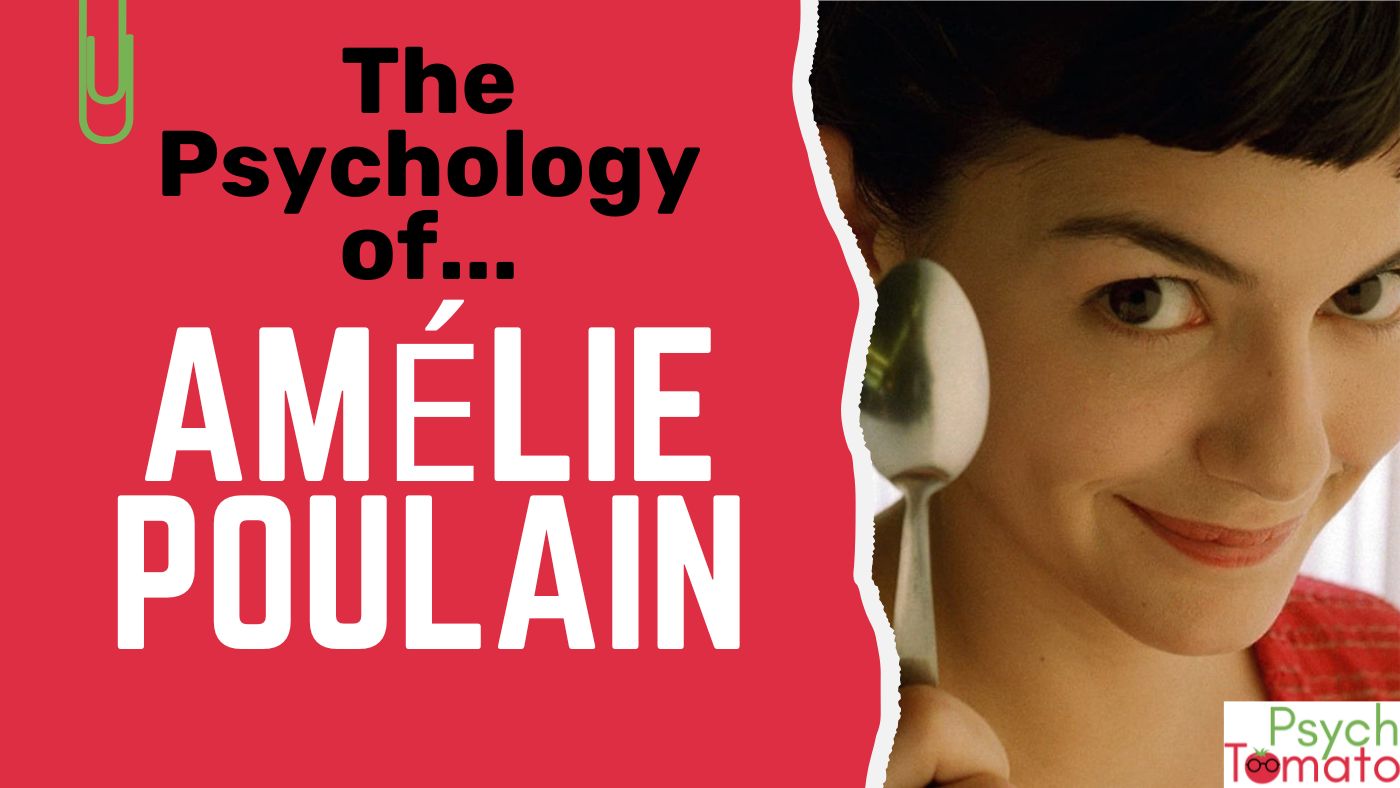
Amélie Poulain lives in a world of quiet observation and playful imagination. But beneath all of the charm lies a deeper truth: she’s far more comfortable creating joy for others than risking vulnerability herself.
Her story shows how imagination and kindness can brighten the world, yet also how fear of connection can keep us living in the shadows.
Before We Begin: A Quick Heads-Up
Spoiler Warning: This article contains spoilers for Amélie (2001), including key plot points about her relationships and personal growth. If you haven’t seen the film, you may want to watch it first. It’s easily my favorite film and is an absolute visual and emotional treat worth experiencing fresh.
Why We’re Talking About This Character: As with all of our Pop Culture articles, this isn’t about diagnosing Amélie, but instead about using her journey to explore real psychological concepts like social anxiety, altruism, avoidance coping, and the role of imagination in connection. Fictional characters like Amélie give us a wonderfully vivid and emotional way to see how these ideas unfold in everyday life.
Meet the Character
Amélie is introduced as a shy, observant young woman living in Paris, working as a waitress at the Café des 2 Moulins.
Her childhood was marked by isolation: misdiagnosed with a heart condition, she was kept apart from other children. Raised by a cold father and neurotic mother, Amélie finds companionship in her imagination and small sensory pleasures.
As an adult, she lives alone in a small apartment, filling her days with whimsical routines like cracking crème brûlée with a spoon or skipping stones along the canal.
Yet beneath this playfulness lies a reluctance to be emotionally vulnerable. Amélie delights in orchestrating happiness for others, but when it comes to her own desires, especially romantic ones, she hesitates. To her, helping others is safe, but letting herself be seen is terrifying.
Her friendship with Raymond Dufayel, a reclusive painter with brittle bone disease, becomes a major turning point. Dufayel, who spends years painting the same Renoir scene over and over again, recognizes Amélie’s avoidance and challenges her to take risks in her own life.
Through their conversations, he becomes both a mirror and a mentor to Amélie, gently but firmly encouraging her to stop hiding behind her good deeds and pursue her own happiness.
Spotlight Scenes: Imagination, Altruism, and Avoidance
Amélie’s transformation begins when she discovers a hidden box of childhood mementos in her apartment wall.
Returning it to its owner (after no small amount of work tracking him down) and witnessing his joy sparks a mission: she will secretly improve the lives of those around her. She guides the blind through the market, plays elaborate pranks on a cruel grocer, and engineers serendipitous meetings for lonely souls.
But Amélie’s own life remains untouched. When she meets Nino, a quirky photo collector whose eccentricity mirrors her own, she’s captivated. However, instead of approaching him directly, she engages in a prolonged game of clues and near-encounters.
One of the film’s most striking moments comes when Amélie imagines herself melting into a puddle of water after losing a chance to meet Nino. It’s the perfect visual metaphor for her avoidance: she can create joy for others, but struggles to step into the spotlight of her own story.
Her conversations with Dufayel sharpen this contrast.
When he tells her, “You mean she’d rather imagine herself relating to an absent person than build relationships with those around her?” it’s as much about Amélie as it is about the painting’s subject. His encouragement helps her take the leap, opening the door, literally and figuratively, to Nino.
The Psychology Behind the Whimsy
Amélie’s avoidance of direct connection reflects elements of social anxiety, the fear of being judged, rejected, or embarrassed in social situations. While she’s not incapacitated by it, she nevertheless prefers indirect interaction, which allows her to maintain control and avoid vulnerability.
Meanwhile, her acts of kindness can be understood through the lens of altruism, which is helping others without expectation of reward. Research shows that altruistic acts can increase well-being for both giver and receiver.
Yet in Amélie’s case, it gets a little more complicated than that. We clearly see that these acts also function as avoidance coping by focusing on others’ happiness to sidestep her own fears.
This is exactly where her vivid imagination comes in and plays such a central role in this coping style. Fantasy and daydreaming can foster creativity and problem-solving, but when overused, they become a way to avoid uncomfortable realities. Amélie’s growth comes when she begins using her fantastic creativity not just to orchestrate others’ lives, but to take direct action in her own.
Putting all of that together, Amélie’s journey can be seen through self-determination theory, which suggests humans thrive when their needs for autonomy, competence, and relatedness are met.
For much of the film, Amélie satisfies autonomy (her whimsical independence) and competence (all of her clever schemes), but she neglects relatedness. Her eventual leap toward Nino represents her finally embracing that missing piece.
Why It Matters (and Clearing Up Misconceptions)
A common misconception is that shy or socially anxious people simply “don’t want” deep relationships.
Amélie’s story shows quite the opposite: she craves connection but fears the vulnerability it requires. Social anxiety isn’t about a lack of desire. It’s about protecting oneself from perceived emotional risk.
So many of us hide behind roles, routines, or even acts of service to avoid exposing our own needs. You might not be secretly matchmaking your neighbors in Montmartre, but maybe you’ve focused so much on helping others that you’ve neglected to let others help (or love) you.
Tomato Takeaway
Amélie Poulain’s whimsical journey reminds us that kindness toward others is most powerful when we also extend it to ourselves. The bravest act of kindness, after all, is often letting ourselves be loved.
But now it’s your turn to join the conversation with today’s Tomato Takeaway!
Have you ever found it easier to help others than to ask for help yourself?
I’d love to read your thoughts in the comments below. Who knows? Your perspective just might inspire someone else to take their own first step toward being seen!

Fueled by coffee and curiosity, Jeffrey is a veteran blogger with an MBA and a lifelong passion for psychology. Currently finishing an MS in Industrial-Organizational Psychology (and eyeing that PhD), he’s on a mission to make science-backed psychology fun, clear, and accessible for everyone. When he’s not busting myths or brewing up new articles, you’ll probably find him at the D&D table or hunting for his next great cup of coffee.