
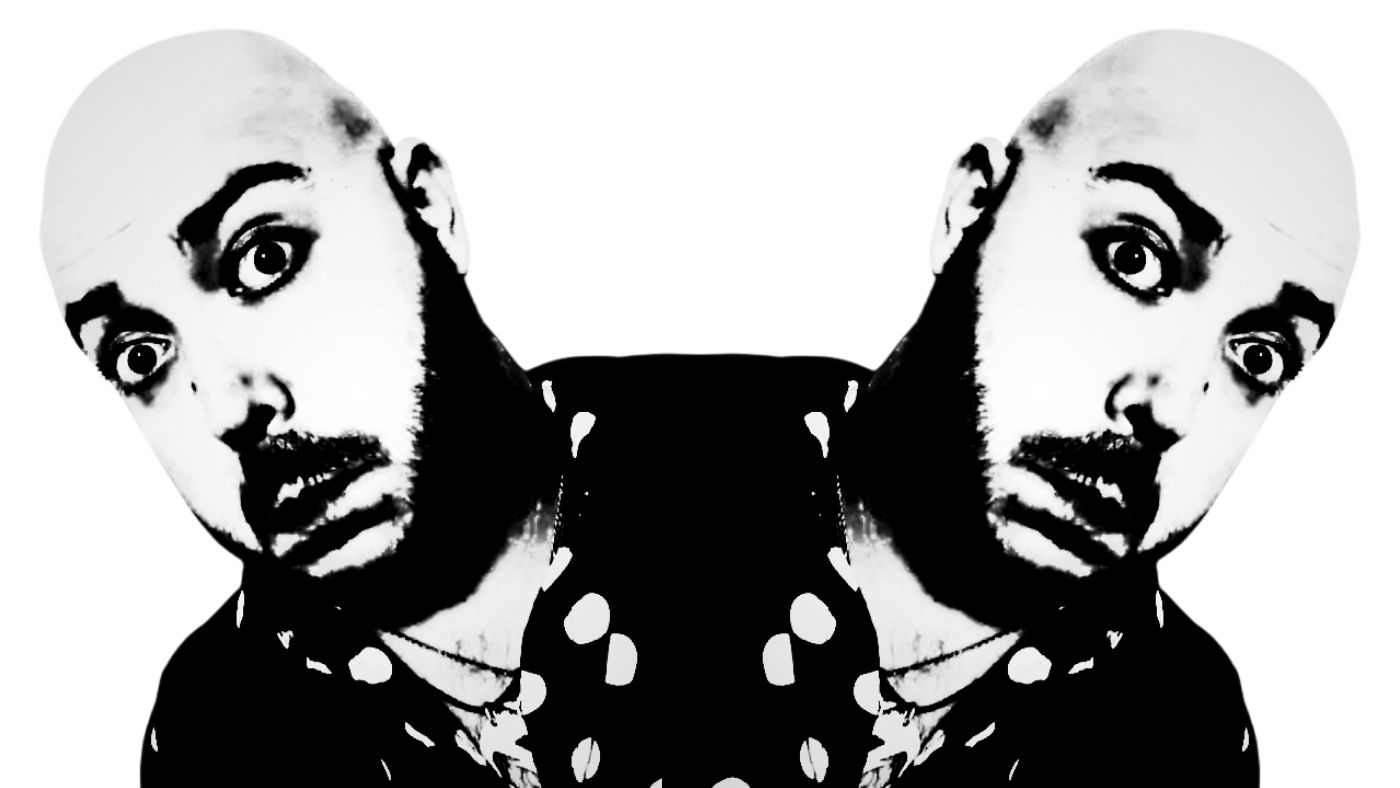
If you’ve ever seen a movie therapist hold up a card covered in symmetrical inkblots and ask, “What do you see?”, you already know the Rorschach Test. Or, at least, you know its pop-culture version.
In reality, it’s a lot less about spotting bats and butterflies and a lot more about how the human mind turns chaos into meaning.
The Rorschach Inkblot Test has been called everything from a brilliant window into the unconscious to a glorified parlor trick. It’s been adored, attacked, banned, revived, and totally meme-ified. Yet more than a century after its creation, it still fascinates psychologists, artists, and anyone who’s ever wondered how much of what we see is really just a reflection of ourselves.
So let’s dive into the story of the famous Rorschach test to discover where it came from, how it works, and why it refuses to fade away, no matter how many times psychology tries to retire it.
Ink, Imagination, and a Swiss Psychiatrist
The Rorschach Test began, quite literally, as a game.
In the early 1900s, Swiss psychiatrist Hermann Rorschach noticed that people saw surprisingly consistent images in random inkblots. At the time, he was fascinated by how perception and personality might be linked. Why did one person see a butterfly while another saw two people fighting?
Rorschach, who was trained in both psychiatry and art, began experimenting systematically.
He created ten carefully designed inkblots, some black and white and some colored, and started showing them to patients. Instead of asking them to interpret the images symbolically, he simply asked, “What might this be?”
And as it just so happens… that question turned out to be revolutionary.
Rorschach wasn’t interested in what people saw so much as how they saw it. Did they focus on the whole image or a small detail? Did they respond quickly or hesitate? Did they see movement, color, emotion?
In 1921, he published Psychodiagnostik, the book that introduced his ten inkblots and outlined how they could reveal patterns of thinking, emotion, and perception.
Although tragically, Rorschach died the following year at age 37, never seeing how famous his creation would become.
The Rise (and Wild Ride) of the Rorschach
After Rorschach’s death, his test spread rapidly first through Europe, then leaping across the Atlantic. By the mid-20th century, it had become one of psychology’s most famous tools.
In the 1940s and 50s, the Rorschach was everywhere: in clinics, hospitals, the military, and even job interviews! Thanks to portrayals in movies and TV shows, the image of a psychiatrist holding up an inkblot card became as iconic to psychology as Freud’s couch!
Part of its appeal was its mystery. The Rorschach seemed to promise access to the hidden corners of the mind as a way to bypass conscious defenses and glimpse the unconscious directly. To psychologists steeped in Freudian theory, it was irresistible.
But the test’s popularity also led to chaos. Everyone seemed to have their own way of scoring and interpreting it. Some clinicians treated it like a projective Rorschach oracle; others used it like a personality X-ray.
The lack of standardization led to wildly inconsistent results and a growing backlash from psychologists who preferred measurable, replicable data.
By the 1970s, the Rorschach had become one of psychology’s most controversial tools. Critics called it unscientific, subjective, even pseudoscientific. Supporters insisted it revealed aspects of personality that no questionnaire ever could.
The debate got so heated that it was (and, in many ways, still is) essentially a century-long academic ink fight.
How the Rorschach Actually Works
Now, despite all of the drama, the Rorschach Test actually does have a method, and it’s a surprisingly detailed one.
A standard test uses Rorschach’s original ten inkblots. The examiner presents each card in a fixed order, asking the participant to describe what they see. Every response is recorded verbatim, along with reaction times, gestures, tone, and even laughter or hesitation.
Afterward, the examiner goes back through the responses in what’s called the “inquiry phase,” asking for clarification, such as where on the blot the person saw something, what features made it look that way, and so on. This second round is crucial because it helps distinguish between what’s seen and how it’s seen.
The responses are then coded according to several variables:
- Location (did they focus on the whole image or a small detail?)
- Determinants (was their perception influenced by color, shape, shading, or movement?)
- Content (what kinds of things did they see? Did they see people, animals, abstract forms, or something else?)
- Originality (was their response common or unusual compared to norms?)
The idea is that these patterns reflect how someone organizes experience: whether they’re detail-oriented or big-picture, emotionally reactive or restrained, imaginative or rigid.
Pretty cool, right?
With this test, it’s not about “right” or “wrong” answers. It’s about how the mind imposes order on ambiguity, which, when you think about it, is something we do literally every day.
The Great Debate: Science or Rorschachian Folklore?
The Rorschach has always lived in a strange space between art and science.
For decades, it was criticized for lacking reliability and validity. In other words, different examiners could interpret the same responses in different ways, and it wasn’t always clear what the test was actually measuring.
That’s not the best look for a scientific tool, eh?
But in the 1990s, psychologist John Exner tried to fix that with the Comprehensive System, a standardized scoring and interpretation method that brought statistical rigor to the process. Later, the Rorschach Performance Assessment System (R-PAS) refined it further, aligning it with modern psychometric standards.
These systems helped restore some credibility.
Research has since shown that, when properly scored, the Rorschach can provide useful information about thought patterns, emotional regulation, and interpersonal perception. This is particularly the case in clinical settings where patients may struggle to articulate their inner world.
Still, the controversy lingers.
Some see it as a valuable therapeutic tool; others view it as a relic of psychology’s more interpretive past. It’s not as widely used today as it once was, but it hasn’t disappeared either.
Like the inkblots themselves, the Rorschach test seems to keep evolving and shifting shape depending on who’s looking.
Why We Can’t Let It Go
So why exactly does the Rorschach continue to fascinate us long after most projective tests were retired?
Partly because it sits at the intersection of science and art, objectivity and imagination. It reminds us that psychology isn’t just about numbers and data crunching, it’s also about meaning.
To that end, there’s also something deeply human about the test.
The Rorschach works because we can’t help but project ourselves onto the world. We see faces in clouds, monsters in shadows, personalities in pets. The test simply formalizes that tendency and turns it into data.
And maybe that’s why it endures.
The inkblots are mirrors not of our faces, but of our minds. They reveal how we make sense of ambiguity, how we connect dots that may not actually exist, and how much of reality is really just interpretation.
And let’s be honest here… It’s also pretty fun, isn’t it?
There’s a reason it keeps popping up in movies and memes! The Rorschach gleefully and openly invites curiosity. It’s psychology’s version of a magic trick, except it’s one that works not because it hides the truth, but because it shows us how eager we are to find it.
Tomato Takeaway
The Rorschach Test may not read minds like pop culture tries to say, but it does do something just as interesting: it shows us how minds read the world. Whether you see a butterfly, a bat, or two people high-fiving, your interpretation says way more about you than the ink.
A century after Hermann Rorschach first spilled some ink and asked, “What might this be?”, the question still resonates not as a diagnostic test, but as a philosophical one. How do we find meaning in the mess? How do we turn random shapes into stories?
So here’s a question for you as we wrap up with today’s Tomato Takeaway:
Do you think our interpretations of ambiguous things (like art, dreams, or even people) reveal who we are, or just what we want to see?
This is a fun and extra juicy topic, so I’m particularly excited to get your thoughts in the comments below!

Fueled by coffee and curiosity, Jeffrey is a veteran blogger with an MBA and a lifelong passion for psychology. Currently finishing an MS in Industrial-Organizational Psychology (and eyeing that PhD), he’s on a mission to make science-backed psychology fun, clear, and accessible for everyone. When he’s not busting myths or brewing up new articles, you’ll probably find him at the D&D table or hunting for his next great cup of coffee.