
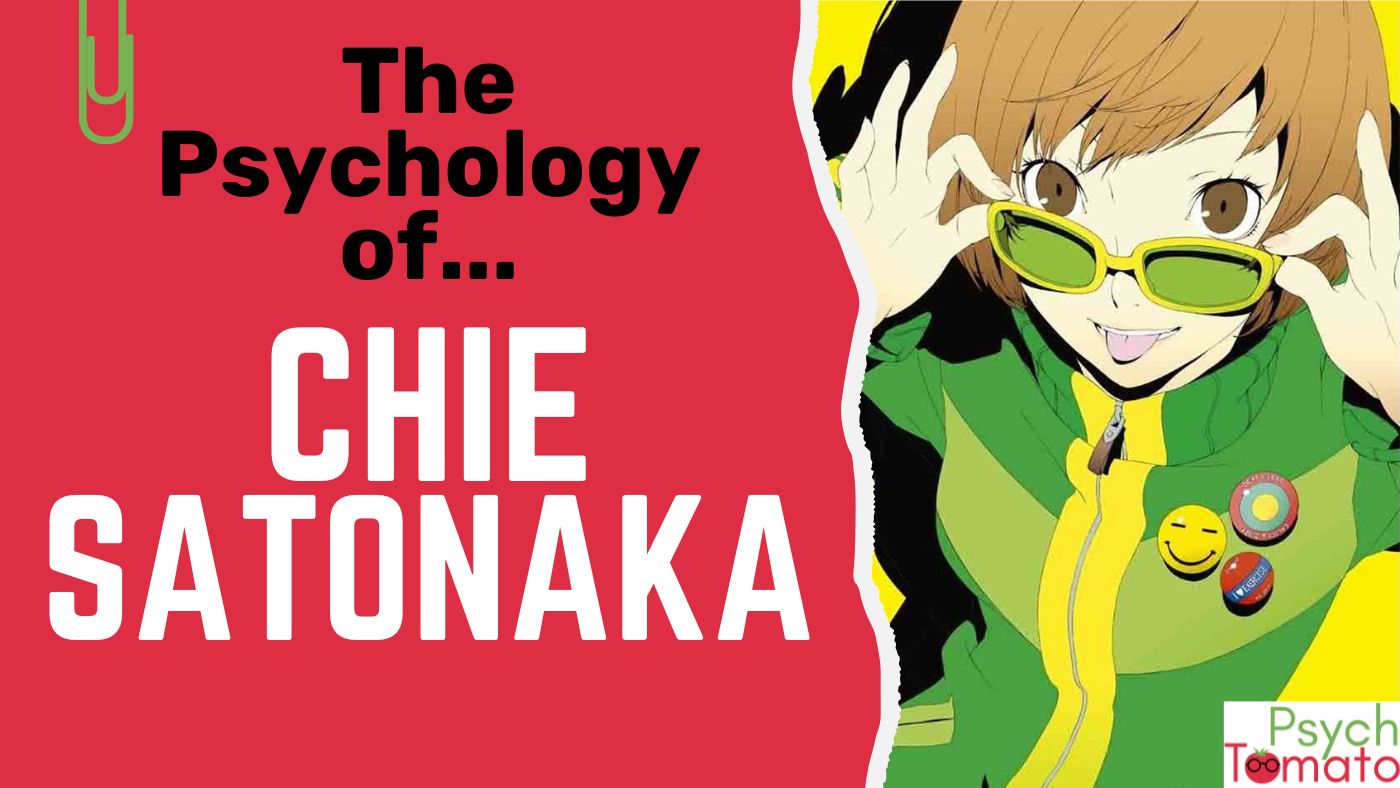
Chie Satonaka is easy to remember: the bright green jacket, the kung fu enthusiasm, and the strongly held conviction that a good meal usually involves steak (which I’m personally inclined to agree with…). Spend more time with her, though, and a harder question emerges beneath all of that energy: how do you know you matter when being useful has become your strongest evidence?
Her friendship with Yukiko Amagi brings that question into focus. Chie cares about Yukiko and takes pride in protecting her. However, she also envies her, and being the person Yukiko needs helps soften the comparison. Admitting that mixture is one of her most difficult moments.
The psychology of Chie Satonaka becomes especially interesting here. Her story explores how affection can become tangled with the need to feel valuable, and how someone can keep their protective instincts while allowing friendship to become more mutual.
Before We Begin: A Quick Heads-Up
Spoiler Warning: This article contains major spoilers for Persona 4, including Chie Satonaka’s Midnight Channel events and Social Link storyline. If you haven’t played the game yet, you may want to save this and come back later.
Why We’re Talking About This Character: This isn’t a psychological diagnosis of Chie. Instead, we’re using her arc to explore some real-world psychological concepts. Fictional characters like Chie can help make these ideas more relatable by showing how they play out in an emotional, human context.
Meet Chie: More Than the Strong Friend
Chie approaches life with a simply huge and utterly dynamic level of pure enthusiasm. She enjoys martial arts movies, trains with our protagonist, and deeply cares about becoming capable enough to dependably help when things get dangerous. Her Social Link gives those interests plenty of room to show themselves, but it also reveals just how quickly the desire to contribute can become a constant pressure to just handle everything herself.
While it gets played for laughs throughout the game, her enjoyment does deserve to be taken seriously. Liking action movies and practicing kicks can certainly be satisfying parts of a person’s life. Reading every energetic moment as nothing more than concealed distress would flatten Chie almost as much as treating her as the group’s walking steak advertisement.
Of course, with a reputation in small-town Inaba as quite the “tomboy,” gender expectations enter her story through her comparisons with Yukiko. Chie’s Shadow Self dwells on Yukiko’s beauty, femininity, and popularity, revealing the standards against which Chie fears she falls short. Keep in mind, though, that those fears tell us about Chie’s insecurity and don’t establish an objective ranking of the two girls.
As with Kanji Tatsumi, physical strength and tenderness both absolutely have plenty of room to coexist. Chie can enjoy being formidable and still want to have the reassurance that other people actually appreciate her for her. As we see through her development in the story, her growth leaves room for all of that.
What Chie’s Shadow Makes Her Admit
Inside Yukiko’s Castle, Chie encounters a Shadow that turns her friendship’s uncomfortable feelings into a biting accusation. It delights in Yukiko’s dependence and mockingly presents the admired girl’s need for help as proof that Chie has the upper hand. Chie then makes the choice to reject what she hears.
It’s an ugly reversal, isn’t it? Someone she envies becomes someone she can feel superior to. Protection thus carries an emotional reward: in this part of their relationship, Chie gets to feel necessary.
Now, this scene can make their entire friendship look seriously suspect if we stop there. However, the conversation after the battle matters just as much. Chie accepts that the Shadow represents a part of herself she has struggled to face. She also insists that her friendship with Yukiko was completely sincere, and Yosuke responds as though that sincerity was never in doubt.
It’s that combination that gives the scene its emotional weight. Chie has to acknowledge a certain selfish element in her care while still holding on to the care itself.
It’s a tricky balance, right? Just like in real life, loving someone doesn’t make every feeling about them generous. Likewise, discovering a certain level of envy also doesn’t erase years of genuine affection.
There’s an important accountability in that distinction. Once Chie can admit that being needed matters to her, she can then consider how it affects the way she treats her friend. Seeing it and then just calling herself terrible would leave her with a verdict. Understanding the conflict, on the other hand, gives her something that she can actually work on.
When Being Needed Becomes Proof of Worth
Psychologists Jennifer Crocker and Connie Wolfe1 describe contingencies of self-worth: the areas of life on which people stake their sense of personal value. In their model, success and disappointment carry particular weight when they occur in a domain that someone uses to decide whether they are worthwhile.
This helps distinguish confidence in a skill from security about oneself.
So, for example, a person can know that they’re good at helping and yet still feel that they have to remain useful to “deserve” their place in a relationship. Applied to Chie, the question becomes one of just how much of her worth she has attached to being Yukiko’s ever-vigilant protector.
Chie gives us a reason to ask. After Yukiko’s Shadow battle, she apologizes for failing to understand her friend’s distress. She admits her jealousy and acknowledges that, while wanting Yukiko to need her, she had actually been relying on Yukiko herself. Yukiko also recognizes that she had failed to see Chie clearly.
Interestingly enough, that confession changes the apparent direction of dependence. The person who looks like the rescuer also needs something from the relationship: reassurance that she matters.
Through this lens, Chie’s dilemma is understandable. If protection is, in her mind, her strongest claim to value, then another person becoming more capable could leave her wondering what her place will be. The story invites that question without showing that she consciously tries to sabotage Yukiko’s independence.
The task ahead is learning to contribute without making every contribution into some kind of an audition for friendship.
A Friendship With Room for Both People
Yukiko’s own story explores the choices she wants to make about her future. For Chie, seeing Yukiko more fully means recognizing a person with her own fears and wishes, including wishes that a “protector” just cannot simply resolve for her.
A second useful psychological distinction helps here. Jennifer Crocker and Amy Canevello describe compassionate goals (which concern another person’s welfare) and self-image goals (which concern establishing or defending a desirable image of oneself).2 Both of these can most certainly be present in a relationship. That said, note that, across two studies of new college students, these goals predicted patterns of support over time; the observational findings don’t establish causation.
Still, this offers language for reading Chie’s conflict. Genuinely wanting Yukiko to be safe and yet also still wanting to remain the person that Yukiko depends on can overlap. Unfortunately, they can also start to pull in different directions when Yukiko starts finding her own footing.
The distinction becomes especially clear as we progress through Chie’s Social Link. When her old classmate Takeshi complains about Yukiko’s cheerful behavior and says he preferred her gloomy, Chie doesn’t hesitate to defend her friend. She recognizes that Yukiko’s laughter belongs to who she is, even when someone else dislikes it.
That’s a meaningful expression of care: paying attention to the person in front of her instead of accepting an image that makes someone else comfortable.
The research provides a useful lens, though college students building new relationships do differ from these longtime friends. We can use the distinction to ask what Chie wants her help to accomplish while still making sure to leave room for her affection, insecurity, and motives to change.
Chie’s Social Link: Finding a Reason to Be Strong
Chie’s training gives our protagonist a way into this whole struggle. To Chie, getting stronger is concrete. If she falls short in something, she can practice, work harder, and imagine being better prepared next time.
Understanding why strength matters to her so much, though, takes a bit longer…
When she encounters some punks harassing Takeshi, Chie confronts them and taunts them toward a fight. Our protagonist intervenes, and they leave after raising the possibility that Takeshi might call the police. Chie initially resents the intervention, but then apologizes. She recognizes that she’s been acting as though everything depends on her, despite the effort her friends are already making.
Her courage and her judgment need different assessments. Standing up for someone matters, but escalating a confrontation can make helping harder. Accepting support gives her another way to respond when concern turns into urgency.
A later conversation then brings Chie closer to the central problem. She recalls meeting Yukiko as a child, upset beside the road because she couldn’t keep a dog. Chie tried to make her laugh, and thus their friendship began. The memory gives their bond an ordinary yet affectionate beginning: one child noticing another child’s unhappiness.
Chie then admits that, after facing her Shadow, she wanted to become more than the person Yukiko relied on, yet her response was to try to become more reliable in general. With some new perspective, she suspects that she’s missed the point.
It’s a pretty perceptive moment, right?
Chie sees that she has expanded the audience for her usefulness while leaving the underlying demand largely intact. Helping more people might give her more opportunities to contribute, but it can’t settle every question she has about her value.
Her next encounter with the punks complicates the picture further. When they threaten a child and invoke Yukiko’s safety, Chie offers to let them hit her without retaliation. While they leave without doing so, we see afterward that she’s shaken and questions her judgment, while recognizing that her wish to protect them is sincere.
It’s a fairly intense scene, but it still leaves room to question her decision. Offering herself as a target is obviously dangerous, and the game even lets our protagonist call her reckless. Its contribution to her growth is the recognition that acknowledging those certain selfish feelings hasn’t somehow made all of her kindness false.
By the friendship ending of her Social Link, Chie still struggles to identify her good points. She decides she can keep searching while committing to protecting people and standing alongside her friends. She has found a direction even with questions about herself still unresolved.
Her farewell conversation gives that direction a practical possibility as she has bought a book about becoming a police officer and is considering a career protecting Inaba. The aspiration connects her abilities to a community that she cares about and remains a plan that she’s beginning to explore.
Chie’s arc leaves her energetic and protective, but with way more room to actually receive help herself and to think about what her strength truly serves. Perfect certainty about herself can wait.
Beyond Inaba: When You’re Always the Strong One
If you’re the type of person that others tend to call when something goes wrong, you may see some familiar patterns between Chie’s story and your own life. Perhaps you organize the practical details, are quick to defend a friend, or generally tend to seem calm enough that everyone assumes that you’ve got the situation covered.
Let’s be real here: there can be real pleasure in being trusted that way.
Chie’s story offers an important question worth sitting with, though…
What happens when someone needs you less? Imagine a friend handles a difficult conversation themselves, finds another source of support, or takes advice that’s different from yours. You might feel proud of them and a little displaced. You can notice both reactions without immediately turning either into a judgment about your character.
The next question is what you do with that discomfort. You could ask what kind of help they want before stepping in.
Sometimes they may want practical assistance, but other times they may instead just want some company while they work out their own answer. Listening gives the relationship room to include what matters to them, even when your “usual role” would be easier to perform.
Of course, there’s room to examine the other side of this, too.
If you’re accustomed to being capable, try considering what you would want a friend to know about your own difficult week. Would you let them comfort you? Could you admit that you don’t have an answer? Mutual care needs opportunities for both people to give and receive.
Not to mention, you can also spend time together when there’s nothing to solve.
Watch the movie, have the meal, share the ridiculous observation… There doesn’t always need to be a fire to put out! Let the relationship include enjoyment that doesn’t depend on anyone “earning their place” through a rescue!
Tomato Takeaway
Chie Satonaka’s story shows us the sometimes uncomfortable truth that care and insecurity can exist in the same friendship. Her Shadow brings that conflict into view while her Social Link gives her time to actually understand it.
Her progress includes admitting envy, accepting help, and finding reasons to use her strength while she’s still trying to figure herself out. She can protect people and allow them to grow just as she can be dependable and have needs of her own.
And, you know, there’s something reassuring about where all of that leaves her… Chie doesn’t need a “finished answer” to who she is before she can keep becoming someone she respects.
But now it’s your turn to join in the conversation with today’s Tomato Takeaway!
Which part of Chie’s story stayed with you most: facing her Shadow, learning to accept help, or figuring out what her strength is for?
Share your thoughts in the comments. Your experience might inspire someone else to stand tall!
Sources and Further Reading
- Crocker, J., & Wolfe, C. T. (2001). Contingencies of self-worth. Psychological Review, 108(3), 593–623. https://doi.org/10.1037/0033-295X.108.3.593 ↩︎
- Crocker, J., & Canevello, A. (2008). Creating and undermining social support in communal relationships: The role of compassionate and self-image goals. Journal of Personality and Social Psychology, 95(3), 555–575. https://doi.org/10.1037/0022-3514.95.3.555 ↩︎

Fueled by coffee and curiosity, Jeffrey is a veteran blogger with an MBA and a lifelong passion for psychology. Currently finishing an MS in Industrial-Organizational Psychology (and eyeing that PhD), he’s on a mission to make science-backed psychology fun, clear, and accessible for everyone. When he’s not busting myths or brewing up new articles, you’ll probably find him at the D&D table or hunting for his next great cup of coffee.